Introduction
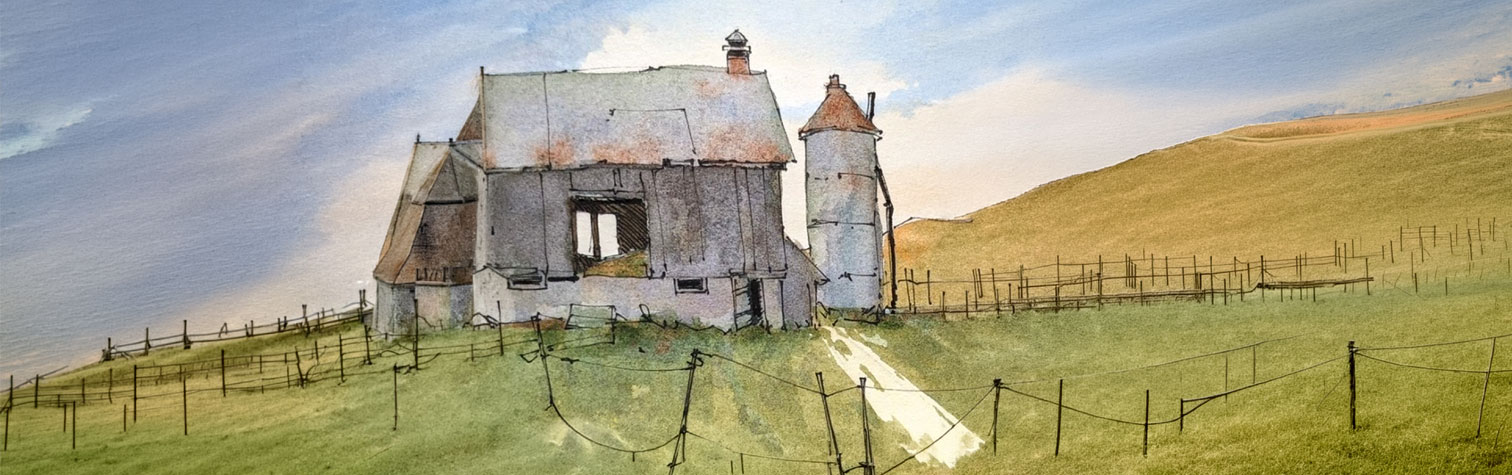
Watercolour is often associated with softness, fluidity, and atmospheric effects. However, when combined with fine linear work, it gains structure, clarity, and precision. The contrast between controlled line and expressive wash creates a powerful visual balance—particularly effective in subjects such as architecture, urban scenes, and detailed natural forms.
Fine line work in watercolour can serve multiple purposes: defining structure, guiding composition, or adding intricate detail. When used thoughtfully, line enhances rather than competes with the washes, allowing both elements to work in harmony.
In this lesson, we explore how to integrate linework and watercolour techniques to create work that is both expressive and controlled.


Watercolour and Pen Birds
by Peter Sheeler.
Types of Pens
Dipping pens – Traditional steel nibs dipped into ink, producing highly expressive, variable lines depending on pressure and angle. Ideal for loose, sketch-like work, and can be used with either waterproof or water-soluble ink, depending on the desired effect.
Ruling pens – An adjustable metal nib that controls ink flow. Excellent for precise, consistent lines (particularly in architectural work), and can be used with ink or even diluted watercolour.
Calligraphy pens – Broad or flexible nibs that produce varied line weight. Useful for expressive mark-making and stylised line work, but less suited to fine technical detail.
Technical pens / fineliners – Provide a consistent, uniform line width and are available in both waterproof and water-soluble variants. Ideal for controlled, detailed drawing.
Fountain pens – Refillable and versatile, offering a wide range of nib types. Excellent for sketchbook work and expressive line.
Brush pens and watercolour markers – Combine line and wash in a single tool and can be reactivated with water for painterly effects.
Sketchbook, Ink and Watercolour
Keeping a concept sketchbook is a valuable way to develop ideas and visual narratives. It functions as a visual diary—documenting observations, exploring compositions, and helping to answer the question: why do you paint what you paint?
While many tools can be used in conjunction with watercolour, combining ink drawing with watercolour is particularly effective for quick, expressive sketches. This approach allows you to capture both structure and atmosphere efficiently.
When working with pen and watercolour, consider whether to use waterproof or water-soluble ink:
- Waterproof ink keeps line work crisp and intact when washes are applied.
- Water-soluble ink allows lines to bleed and merge into the paint, creating softer, more atmospheric effects.
The key is to select tools that align with your intent—whether you want clarity and precision, or integration and fluidity.
Indian Ink
Indian ink is a black drawing ink traditionally made from carbon black (lampblack), water, and a binder—most commonly shellac. It is valued for its deep, rich black tone and its permanence, offering excellent lightfastness over time. The presence of shellac gives many Indian inks their durable, film-forming quality once dry.
Waterproof India ink, which is typically shellac-based, becomes insoluble once dry and forms a stable, fixed layer on the surface. In contrast, non-waterproof or water-soluble inks will re-activate when water is applied, causing the ink to bleed or diffuse. Most commercially available Indian inks are waterproof, but it is important to confirm this on the label before use.
Indian ink works very effectively in combination with watercolour and is commonly used in line-and-wash techniques. When using waterproof ink, the drawn lines remain crisp and unaffected by subsequent washes, making it ideal for controlled, structured work. If a water-soluble ink is used instead, the lines can soften, bleed, or be intentionally manipulated with water, allowing for more expressive and atmospheric effects.

Should Ink Be Applied Before or After Watercolour?
Ink can be applied either before or after watercolour, depending on the desired outcome. Applying ink first is the most common approach, as it establishes the structure of the drawing before washes are added. This method works best with waterproof ink and results in a clean, controlled, and graphic appearance.
Applying watercolour first and adding ink afterwards allows the artist to respond to the painted forms, producing a more painterly and less rigid result. A combined approach is also effective, where an initial ink drawing is followed by washes and then selectively reinforced with additional ink.
Shellac-based India ink becomes permanent when dry and can damage tools if not handled properly. Brushes and pens should be cleaned immediately after use with water and, if necessary, an ammonia-based cleaner can be used to remove residue. It is advisable to avoid using traditional India ink in fountain pens unless the product is explicitly designed for that purpose.
Line Quality and Light
Line quality should respond directly to light, form, and structure, rather than functioning as a fixed outline. A consistent, uniform line tends to flatten the subject, while varied line weight creates depth and hierarchy.
As a general principle, use thinner, lighter lines on the light-facing side of a form, and darker, thicker lines on the shadow side. This reinforces the illusion of light without relying solely on tonal value. Lines can also be broken, softened, or even lost entirely in areas of strong light, allowing the white of the paper to suggest edges and highlights.
Avoid enclosing forms with continuous, heavy outlines. Instead, allow lines to breathe and remain open, particularly where edges meet light. Suggest rather than describe—imply structure with selective marks rather than defining every contour. Overly tight outlining can make the work feel rigid and illustrative rather than painterly.
Where appropriate, leave small gaps and allow the wash to define the edge. This creates a more natural integration between line and paint. The most effective line work is not constant, but responsive—shifting in weight, clarity, and presence according to the demands of light, form, and composition.
Contemporary Example: Peter Sheeler
Peter Sheeler is known for his refined pen-and-watercolour work, particularly in architectural and urban subjects. His approach combines confident line drawing with controlled washes, resulting in compositions that are both structured and lively.

Sheeler occupies a very specific niche within urban sketching, characterised by small-format compositions, simplified architectural forms, restrained, almost decorative washes, and a controlled yet expressive use of line. While many urban sketchers tend to lean either towards greater architectural precision or towards more expressive and chaotic washes, very few maintain such a refined balance of charm, clarity, and restraint—this is precisely what distinguishes his work.
Watch video demo by Peter Sheeler, click here…

His current focus is on miniature watercolours, painted both on location and in the studio. These small-scale works demand precision, economy of mark, and careful control of both line and wash. His work demonstrates how fine lines can anchor a composition while watercolour introduces atmosphere and depth.


Useful Tips
- Decide early: line first or wash first—both approaches yield different results.
- Use waterproof ink for clarity; water-soluble ink for integration.
- Avoid overworking—line should support, not dominate.
- Vary line weight to suggest depth and hierarchy.
- Use broken or implied lines rather than outlining everything.
- Let the watercolour do the work—avoid colouring mechanically “within the lines”.
- Test pens before use; some labelled “waterproof” may still bleed slightly.
- Work from general to specific.
Practical Exercise: Architectural Study
Choose one of the provided architectural references.
- Begin with a light pencil sketch, focusing on proportion and perspective. Once satisfied, apply your pen work, using varied line weight to distinguish structural elements from finer details.
- Decide whether to use waterproof or water-soluble ink before proceeding.
- Apply watercolour washes. Start with light, broad applications to establish overall tone and atmosphere. Work wet-into-wet for softer areas such as sky or distant elements, and use wet-on-dry for more controlled applications on buildings.
- Allow the line and wash to interact naturally. Avoid over-defining—suggest detail rather than fully rendering every element.
- Refine selectively by adding darker accents where needed and reinforcing key structural lines if necessary. Maintain a balance between precision and looseness.
Critique and Reflection Questions
- Does the line work enhance or compete with the watercolour?
- Is there a clear hierarchy between structure and detail?
- Are line weights varied effectively?
- Does the watercolour integrate naturally with the ink?
- Is there a balance between control and spontaneity?
- Are details suggested rather than over-rendered?
- Where could more restraint improve the work?
Conclusion
The combination of watercolour and fine line offers a versatile and expressive approach to painting. By balancing structure with fluidity, artists can create work that is both precise and atmospheric.
Mastery lies not in complexity, but in control, intention, and restraint. Whether working in a sketchbook or on a finished piece, the integration of line and wash allows for a dynamic interplay between drawing and painting—each enhancing the other.


Leave a Reply