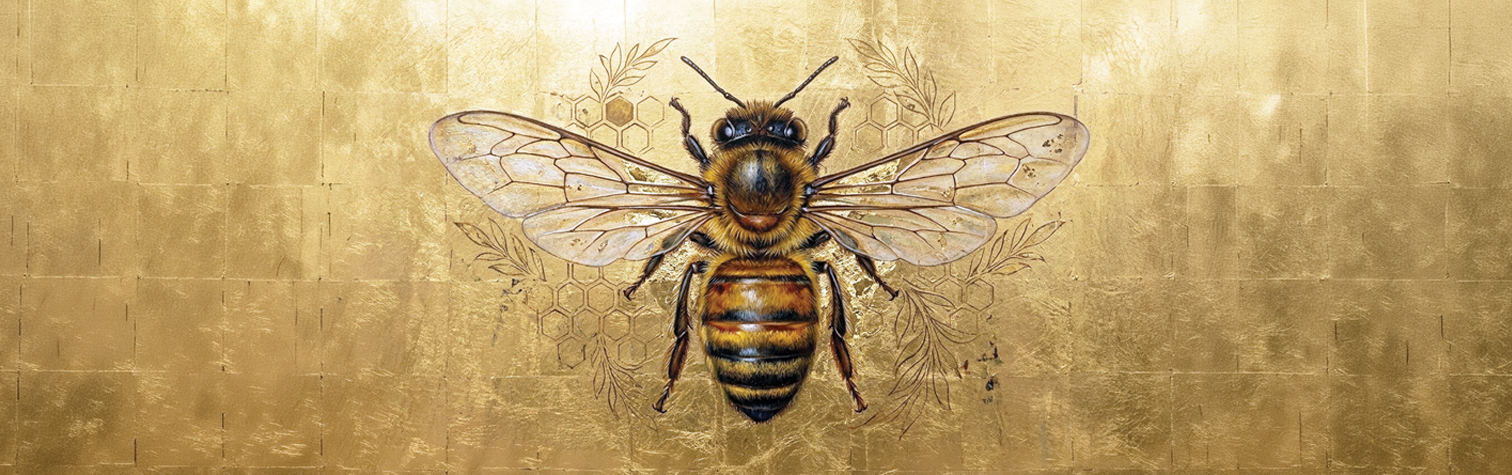
Subject Matter: Illuminated Insect Study – Butterflies, Beetles or Dragonflies
Introduction
Mixed media is one of the most exciting and versatile approaches to creating art. Instead of being limited to a single material, artists combine different mediums and techniques to expand their creative possibilities. By integrating materials such as watercolour, acrylic, oil paint, ink, coloured pencil, pastel, collage, metallic leaf, texture pastes, fabrics, and found objects, artists can create artworks with greater depth, texture, atmosphere, and visual impact.
Successful mixed media requires more than simply adding different materials together. Artists need to understand how each medium behaves, how materials interact chemically and physically, and how they can be combined to strengthen the visual language of an artwork. Throughout this course, students will progress from traditional realistic applications towards increasingly expressive and abstract approaches. Each lesson will introduce new techniques while building on previous skills, allowing students to explore how materials influence composition, texture, colour, and meaning. By the end of the course, students will have developed the confidence to combine materials thoughtfully and create artworks that reflect their own unique artistic voice.
In this first lesson, we introduce one of the oldest and most visually striking mixed media techniques: gilding. The combination of metallic leaf with painting creates a powerful contrast between reflective surfaces and painted textures, adding depth, symbolism, and visual emphasis.

Monika Pon, after Vladimir Tretchikoff. Oil and Gold Leaf on Canvas. Reproduction by Marc Alexander
Definitions
Mixed Media – An artwork created using two or more different artistic materials or processes. Mixed media allows artists to combine the unique qualities of different mediums to achieve effects that would not be possible with a single material.
Gilding – The process of applying thin sheets of metal, such as gold, silver, or imitation foil, onto a surface using an adhesive.
Gold Leaf – Gold that has been hammered into extremely thin sheets. Genuine gold leaf is available in different karats, with 24-karat gold being the purest and most commonly used for fine art gilding.
Imitation Gold Leaf (Metal Foil) – A less expensive alternative made from alloys such as copper and zinc. It creates a similar appearance to gold but requires sealing because it can oxidise and tarnish over time.
Contrast – A principle of art created by placing opposing elements together, such as light and dark, warm and cool colours, rough and smooth textures, or matte and reflective surfaces.

The History and Use of Gold Leaf in Art
The use of gold leaf has a long and fascinating history. For centuries, artists have used gilding in religious icons, illuminated manuscripts, mosaics, architecture, jewellery, and decorative objects. Traditional water gilding on glass, mirrors, and highly polished surfaces remains one of the most refined and technically demanding forms of gilding.
Gold became associated with ideas of spirituality, importance, wealth, and permanence because of its luminous and unchanging nature. Artists throughout history have used gold not only as decoration but as a way of creating symbolic meaning and directing attention.


The Austrian artist Gustav Klimt famously combined gold leaf with oil paint during his celebrated “Golden Period”. His painting The Kiss demonstrates how metallic surfaces can be integrated with patterns, colour, and symbolism to create a sense of luxury and timelessness. Gustav Klimt remains one of the most important figures in the history of art, known for his contribution to the development of modernism and his unique, ornamental style that continues to captivate audiences.
Portrait of Adele Bloch-Bauer, by Gustav Klimt

South African artist Alexis Preller also explored the relationship between gold leaf and oil painting. Influenced by Byzantine icons, Egyptian art, African symbolism, and ancient cultures, Preller used gold surfaces to create luminous backgrounds and spiritual qualities within his paintings. The contrast between reflective gold and rich oil colours gave his work a sense of mystery, depth, and importance.


Contemporary South African artist Marc Alexander combines traditional oil painting techniques with gilded surfaces and textured finishes. His wildlife and portrait paintings use gold leaf as a compositional element rather than simple decoration. The reflective metallic areas create contrast against the detailed realism of oil paint, highlighting important features and adding a sense of elegance and timelessness.


Understanding the Chemistry of Mixed Media
A successful mixed media artwork depends on understanding how different materials interact. Each medium has unique properties that affect adhesion, drying time, flexibility, and permanence.
Artists generally work from the more absorbent and less stable materials towards stronger, more protective layers. Water-based mediums such as watercolour, ink, and acrylic are usually applied before oil-based materials. Dry mediums such as charcoal, pastel, and coloured pencil are normally added after wet applications because they sit on the surface and can easily be disturbed by additional moisture.
Acrylic paint should always be applied before oil paint. Acrylic forms a flexible, stable surface that allows oil paint to bond effectively, while oil creates a non-absorbent surface that prevents acrylic from adhering properly. Understanding these principles prevents cracking, peeling, and deterioration, ensuring that mixed media artworks remain stable and archival.
Adhesives and Materials for Applying Gold Leaf
Gold leaf requires an adhesive surface known as size.
Suitable adhesives include:
- Acrylic gilding size
- Oil-based gilding size
- Oil-based clear wood varnish
- Acrylic mediums
- Gel mediums
- PVA-based adhesives
- Specialist metal leaf adhesives
For mixed media applications, acrylic gilding size is often preferred because it is flexible, easy to use, and compatible with acrylic and oil painting techniques.
The adhesive must reach the correct tackiness before applying the leaf. If it is too wet, the leaf may move or wrinkle. If it is too dry, the leaf may not adhere properly.
Sealing and Protecting Gold Leaf
Protecting gold leaf is essential, especially when using imitation foil. Unlike pure gold, imitation leaf contains metals that can oxidise when exposed to moisture, air, pollutants, and hand oils from handling.
A suitable varnish or protective sealer helps:
- Prevent tarnishing.
- Preserve the metallic brilliance.
- Protect against scratches.
- Improve long-term durability.
Artists may also deliberately oxidise imitation leaf using controlled methods, such as vinegar, to create aged or antique effects.
Methods for Deliberately Tarnishing Gold Foil and Metal Leaf

Artists sometimes intentionally tarnish imitation gold leaf, silver leaf, or copper foil to create an aged, antique, or weathered appearance. This process is known as patination and is commonly used in decorative arts to introduce variation, depth, and historical character to a metallic surface. It is important to note that pure gold leaf (such as 22–24 karat gold) will not readily tarnish because gold is chemically stable and resistant to oxidation. The following techniques are therefore mainly used with imitation gold leaf, silver leaf, copper leaf, or other metal foils.
Vinegar (Acetic Acid)
White vinegar can be used to gently accelerate oxidation, especially on imitation gold leaf and copper-based foils. The acidic environment reacts with the metal surface, gradually creating darker, warmer, or uneven aged effects. The process is slow and should be monitored carefully.
The Kiss, after Gustav Klimt. Oil and gold leaf on canvas. Reproduction by Marc Alexander. The variation in gold in this painting is a result of tarnishing with white spirit vinegar,
Liver of Sulphur (Potassium Sulphide)
A traditional patination chemical used by jewellers and metal artists. It reacts with metals such as copper, brass, and silver to create darker tones ranging from brown to black. It should be used carefully with proper ventilation and protective equipment.
Ammonia Vapour
Ammonia can create aged effects on copper-containing metals by accelerating chemical reactions on the surface. It is often used in a controlled container rather than applied directly. Extreme care should be taken because ammonia fumes are hazardous.
Commercial Patination Solutions
Specialist metal patinas are available for artists working with copper, brass, bronze, and silver. These provide more predictable results and are often preferred for professional work.
Ink and Pigment Glazes (A Safer Artistic Alternative)
Instead of chemically altering the metal, artists can create an aged appearance by applying transparent layers of:
- India ink
- Acrylic glazes
- Oil glazes
- Bitumen or antiquing mediums
These methods allow greater artistic control and are easier to integrate with mixed media painting techniques.
Important Considerations
Before deliberately tarnishing metallic foil:
- Always test the process on a sample piece first.
- Remember that oxidation may continue over time.
- Seal the finished surface after achieving the desired effect.
- Avoid applying aggressive chemicals near delicate painted areas.
- Consider whether the altered surface will remain archival.
- If the tarnishing chemicals need to be removed with water, then an oil-based size should be used, as a water-based size may dissolve, causing the gold leaf to loosen and potentially come away from the surface.
For fine art applications, many artists prefer controlled glazing techniques over chemical tarnishing because they provide the appearance of age while maintaining greater control, stability, and longevity.
Suitable Mediums Over Gold Leaf
Gold leaf can be combined successfully with several painting mediums:
Acrylic Paint – Acrylic is one of the most suitable mediums because it adheres well, dries quickly, and remains flexible. Transparent acrylic glazes allow the metallic surface to glow through layers of colour.
Watercolour and Ink – When applied over sealed gold leaf, watercolour and ink can create delicate transparent effects while maintaining the brilliance of the metallic surface.
Oil Paint – Oil paint can be used over properly prepared gold leaf or foil and can create rich, jewel-like effects through glazing techniques. Oil should be applied after water-based materials.

The Tree of Life, after Gustav Klimt. oil on canvas. Reproduction by Marc Alexander
How To Gild
Preparing the Surface
- Use a rigid surface or high-quality canvas board or paper.
- Apply gesso and allow it to dry.
- Smooth the surface lightly with fine sandpaper.
- Transfer or draw your insect design using a graphite pencil.
Applying the Gold Leaf
- Paint the areas to be gilded with acrylic gilding size.
- Allow approximately 15 minutes for the adhesive to become tacky.
- Carefully cut to size and apply gold or silver foil.
- Use a soft brush in circular motions to lightly press the foil down.
- Remove excess foil and save it in a container for future projects.
Developing the Painting
- Redraw details using waterproof fine liner.
- Add transparent watercolour washes, acrylic, or oil glazes.
- Use the metallic areas selectively to contrast focal points.
- Balance realistic detail with decorative elements.

Adam, after Alexis Preller.
Oil and Gold Leaf on board. Reproduction by Marc Alexander
Art Principle Focus: Contrast
Contrast helps create visual interest and directs the viewer’s attention. Gold leaf or metallic foil is a powerful design element that can dramatically enhance the visual impact of an artwork. Its reflective surface contrasts with the matte finish of most paints, immediately drawing the viewer’s eye and creating a natural focal point.
Gold can also provide contrast in colour, value, texture, and temperature, making surrounding colours appear richer and more vibrant. When used thoughtfully and sparingly, gilding adds a sense of elegance, luminosity, and depth while reinforcing the principles of emphasis and contrast. Rather than overpowering a composition, gold leaf should be used intentionally to highlight important areas and strengthen the overall design of the artwork. In this lesson, you can explore the contrast between:
- Reflective gold and matte paint.
- Bright metallic surfaces and darker colours.
- Smooth foil and textured brushwork.
- Realistic detail and decorative pattern.
The successful use of contrast creates emphasis and strengthens the overall composition.

Useful Tips
- Less gold is often more effective.
- Plan where metallic highlights will be placed before applying foil.
- Avoid decorating every area; allow contrast to create impact.
- Use matte colours next to metallic surfaces to increase brilliance.
- Handle gold leaf carefully because it is extremely delicate.
- Always test compatibility between different materials.
Practical Exercise
Illuminated Insect Study
Create a realistic butterfly, beetle, or dragonfly artwork incorporating:
- Gold, silver, or copper foil.
- Transparent watercolour washes.
- Fine ink details.
- Coloured pencil refinement.
Steps
- Prepare your surface with gesso.
- Create your insect design.
- Apply gilding adhesive.
- Apply metallic foil.
- Add line work and painted details.
- Balance realistic observation with decorative design.
Critique and Reflection Questions
- Does the metallic surface enhance the subject?
- Where does the viewer look first?
- Is the gold used intentionally or randomly?
- Does the contrast between materials strengthen the composition?
- How do the different mediums interact?
- Would the artwork be stronger with more or less metallic detail?
Conclusion
This lesson introduces the foundation of mixed media: understanding that materials are not simply added together, but carefully combined to create a stronger visual experience. Gold leaf demonstrates how a single material can transform an artwork by introducing contrast, symbolism, texture, and light.
By understanding the chemistry of materials, artists can confidently combine mediums while preserving the stability and longevity of their work. The interaction between transparent paint, solid surfaces, reflective metals, and detailed drawing creates endless possibilities for creative exploration.
Mixed media allows artists to move beyond the limitations of one technique and develop a richer visual vocabulary. Whether combining watercolour with pencil, acrylic with texture, oil with gold leaf, or traditional painting with found materials, the goal remains the same: to use every material intentionally to communicate an idea, emotion, or experience.
In this first project, you will begin your journey from traditional representation towards the broader world of mixed media, where creativity, experimentation, and technical understanding come together.


Leave a Reply