

Granulation is a material behaviour, not simply a technique. It occurs when heavier pigment particles settle into the tooth of the paper rather than remaining evenly suspended. Heavy, irregular particles, such as those found in natural earth pigments (80 microns and above), naturally granulate, while modern organic synthetic pigments (with particle sizes of less than a micron) are designed to remain evenly suspended.
Naturally granulating pigments include:
- Ultramarine (PB29)
- Cobalt Blue (PB28)
- Cerulean Blue (PB35/PB36)
- Burnt Sienna (PBr7)
- Yellow Ochre (PY43)
- Mars (Oxide) Black (PBk11)
Work on cold-pressed paper for a moderate effect, or rough paper for maximum granulation.
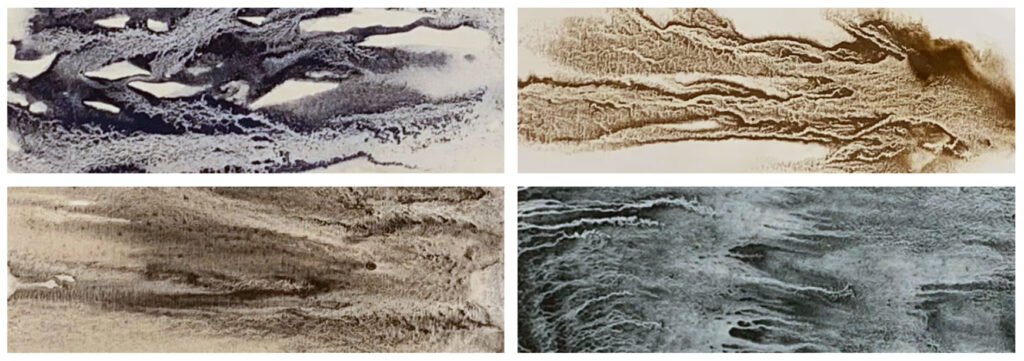
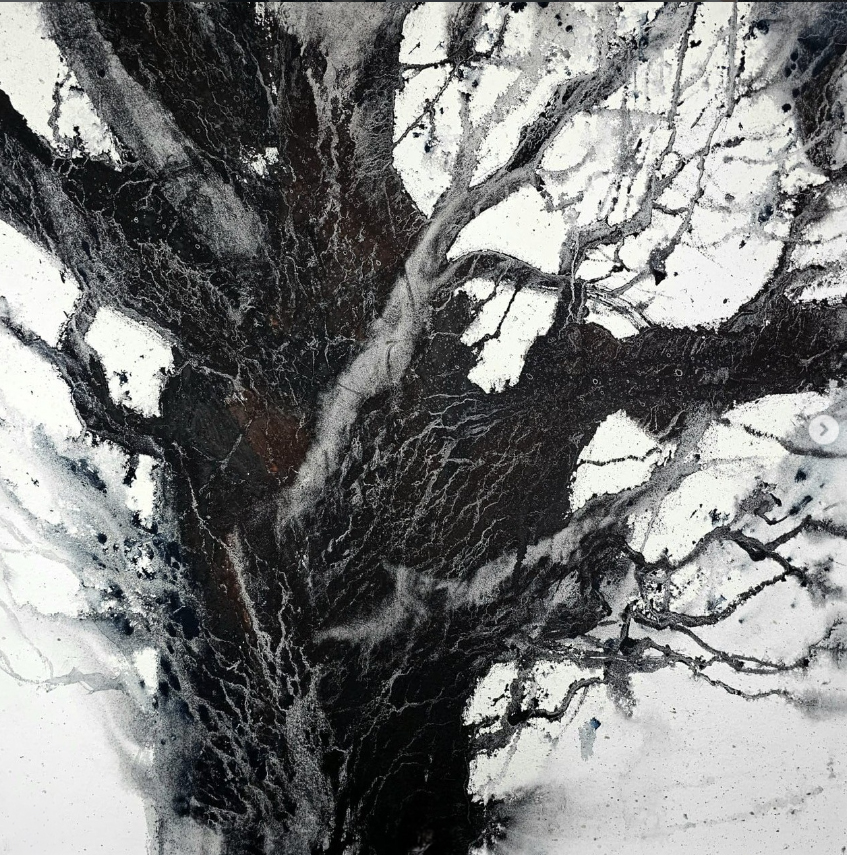
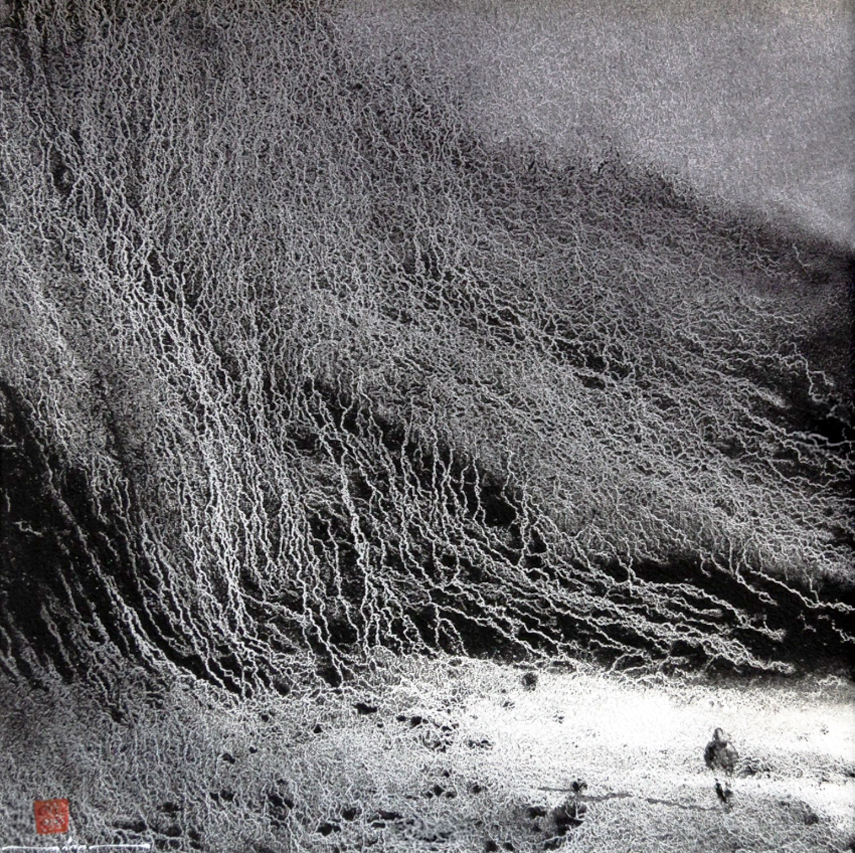
By letting a granulating wash flow, it is possible to get beautiful flow patterns as granulating particles build up against barriers (such as a bit of dry paper). From my experience, this only works with the more extreme granulating watercolours.
Granulation can be controlled by maintaining a balanced water ratio (damp, not flooded). Load the brush with a moderately strong pigment mixture, tilt the surface slightly to encourage movement, and avoid overworking the wash. Granulation occurs during the drying stage—the artist’s role is to create the right conditions and then allow the process to unfold naturally.
these are part of the “Primatek” range (mineral-based paints), so they don’t behave like standard single-pigment colours with fixed Colour Index (CI) codes. Most are genuine mineral pigments and are therefore classified as PBk (black), PBr (brown), or mixed mineral compositions, often without a single precise CI designation.
Here is a clear breakdown:
Bloodstone Genuine
- Colour: Deep green with red/brown speckling
- Pigment classification: Primarily PBk11 (Mars Black / iron oxide) with natural mineral variation
- Notes: Strongly granulating, earthy, opaque to semi-opaque
Piemontite Genuine
- Colour: Muted reddish-brown to violet-grey
- Pigment classification: Complex mineral (manganese silicate), no single standard CI code
- Notes: Subtle granulation, low chroma, atmospheric
Zoisite Genuine
- Colour: Grey-green with muted earthy undertones
- Pigment classification: Mixed mineral (calcium aluminium silicate), no single CI code
- Notes: Soft granulation, slightly chalky appearance
Goethite (often sold as Hematite/Goethite mixes)
- Colour: Warm golden brown to ochre
- Pigment classification: PY43 / PBr7 (natural iron oxides)
- Notes: Classic earth pigment behaviour, reliable granulation
Blue Apatite Genuine
- Colour: Blue-green with strong separation (turquoise to earthy brown undertones)
- Pigment classification: Complex mineral (phosphate), no single CI code
- Notes: Very strong granulation and colour separation
Sodalite Genuine
- Colour: Deep muted blue, slightly greyed
- Pigment classification: Natural sodium aluminium silicate, no single CI code
- Notes: Moderate granulation, softer than Ultramarine
Important Practical Insight
Unlike standard pigments (e.g. PB29, PY43), these “genuine” colours:
- Do not have consistent CI codes
- Are often labelled as “genuine mineral pigment” rather than chemically standardised pigments
- Vary slightly from batch to batch
- Are valued for granulation and texture, not colour intensity
In essence
These colours are less about predictable mixing and more about surface behaviour, granulation, and natural variation—which is why they are so effective in atmospheric and textural work.
Granulation Medium
A granulation medium does not create true granulation from scratch; rather, it modifies how pigment behaves in water. Most granulation mediums work in two primary ways:
Encouraging particle clumping (flocculation)
The medium alters the surface tension and flow of the wash, encouraging pigment particles to gather into clusters rather than disperse evenly. This results in a mottled, broken texture.
Promoting settling (sedimentation)
The medium disrupts the even suspension of pigment, allowing heavier particles to settle into the valleys of the paper, thereby exaggerating the natural grain.
In simple terms, the medium destabilises a smooth wash so that pigment separates and gathers, mimicking the behaviour of naturally granulating pigments.
Winsor & Newton Granulation Medium is widely regarded as an industry standard. However, the brand matters less than how the medium is used:
- Use a strong dilution with medium (rather than water) for maximum effect
- Work on rough paper for more pronounced results
- Minimise brushing to maintain clean granulation patterns
Contemporary Example: Nicolás López
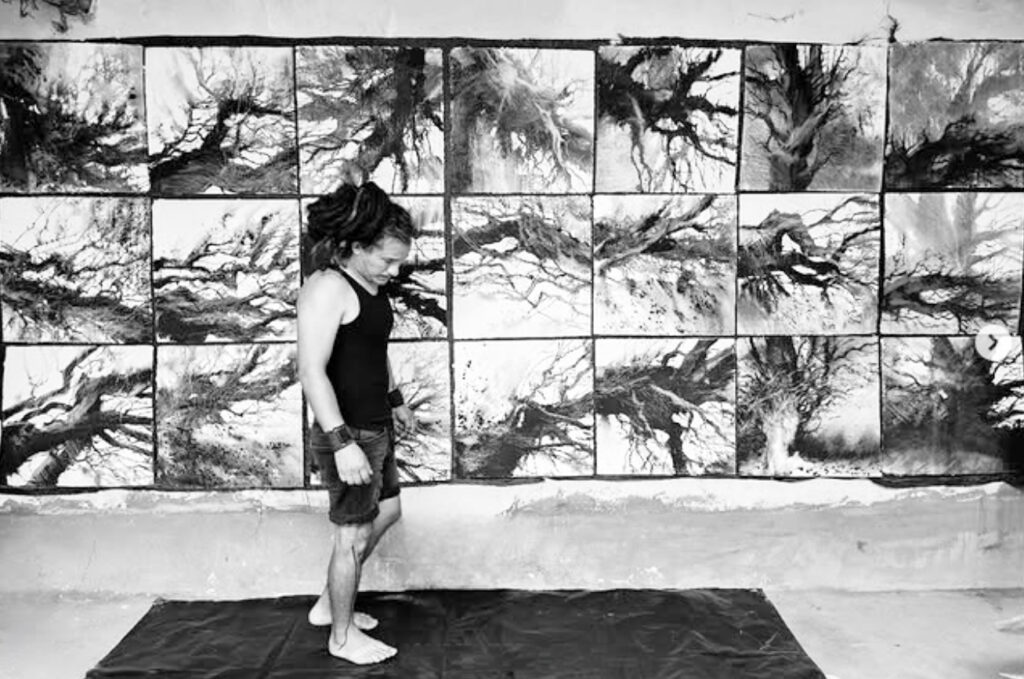
Nicolás López achieves his distinctive textures by combining deliberate water control with highly granulating pigments such as Daniel Smith Lunar Black watercolour. This pigment contains heavy particles that naturally separate and settle into the paper’s texture rather than dispersing evenly. By working on rough or cold-pressed paper and using relatively strong pigment mixtures, he encourages this sedimentation to create broken, mineral-like surfaces.
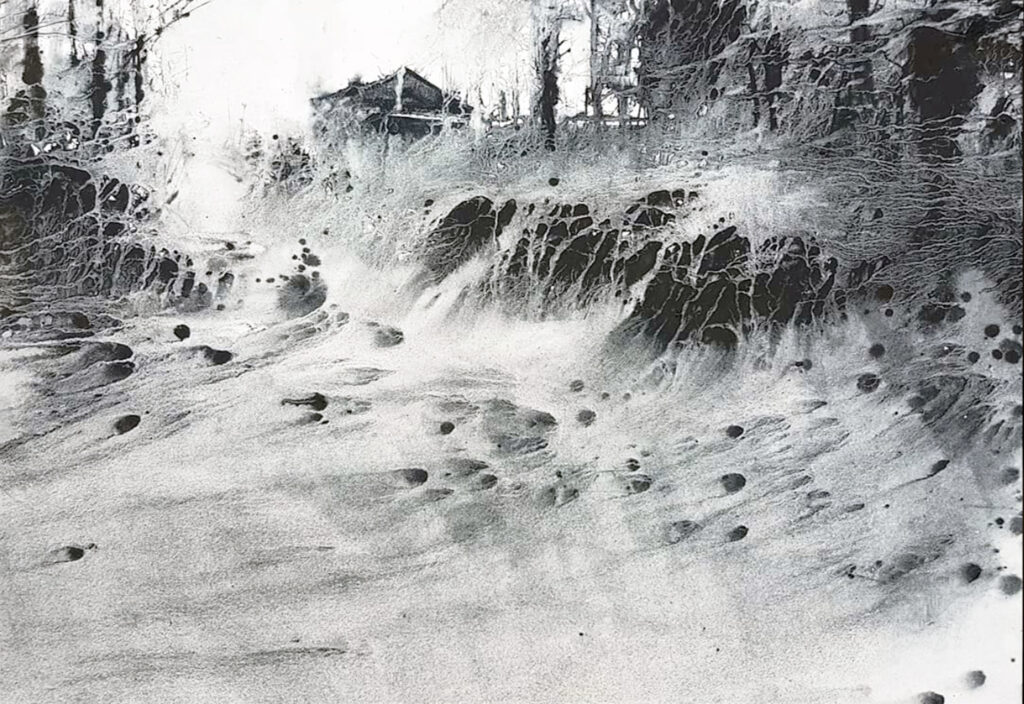
His process relies on minimal interference once the wash is active. He may tilt the surface to guide flow or lightly disturb areas to avoid uniformity, but largely allows gravity and evaporation to shape the result. The first layer establishes the texture, with later layers applied more selectively. The overall approach is one of controlled conditions followed by restraint, allowing natural water movement to generate complex, organic effects.
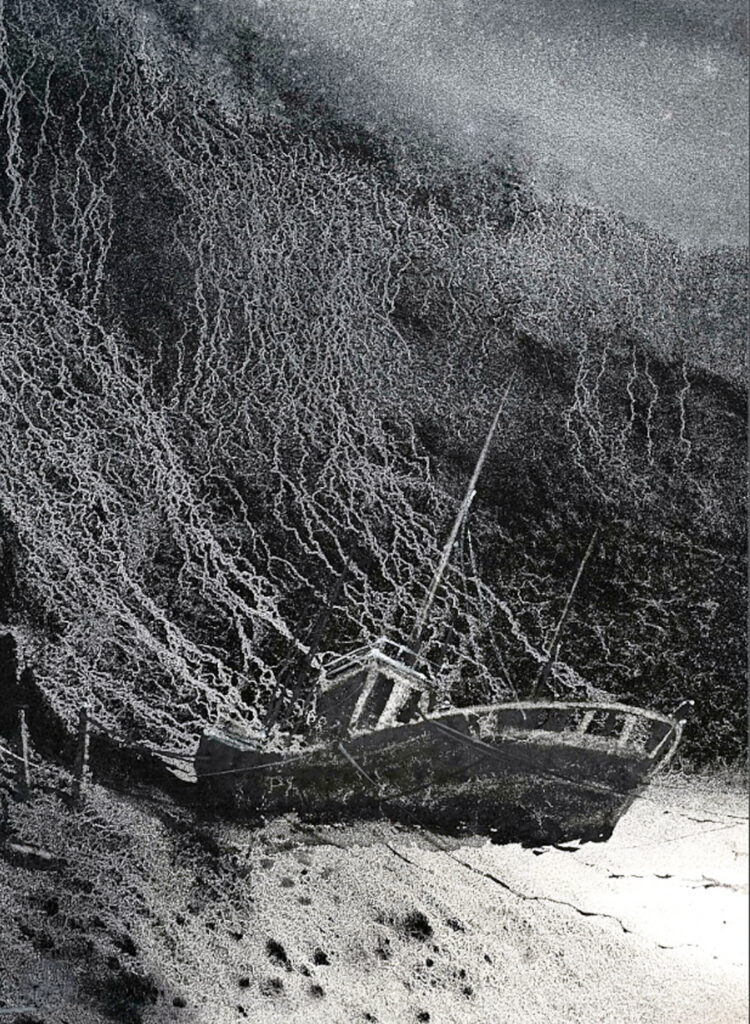
López demonstrates that texture—particularly granulation—is most effective when it is allowed, not forced. His work shows how restraint, timing, and pigment choice can produce rich, atmospheric surfaces.he effect.
Watch video demo by Nicolás López.
Nicolás López is a contemporary watercolour artist known for his expressive, atmospheric landscapes and evocative use of colour. His work balances abstraction and representation, often featuring luminous washes, granulating pigments, and dynamic brushwork to capture mood and light rather than fine detail.
López has gained a strong following online, where he shares demonstrations and teaching content, inspiring artists with his approach to controlled spontaneity and modern watercolour techniques.
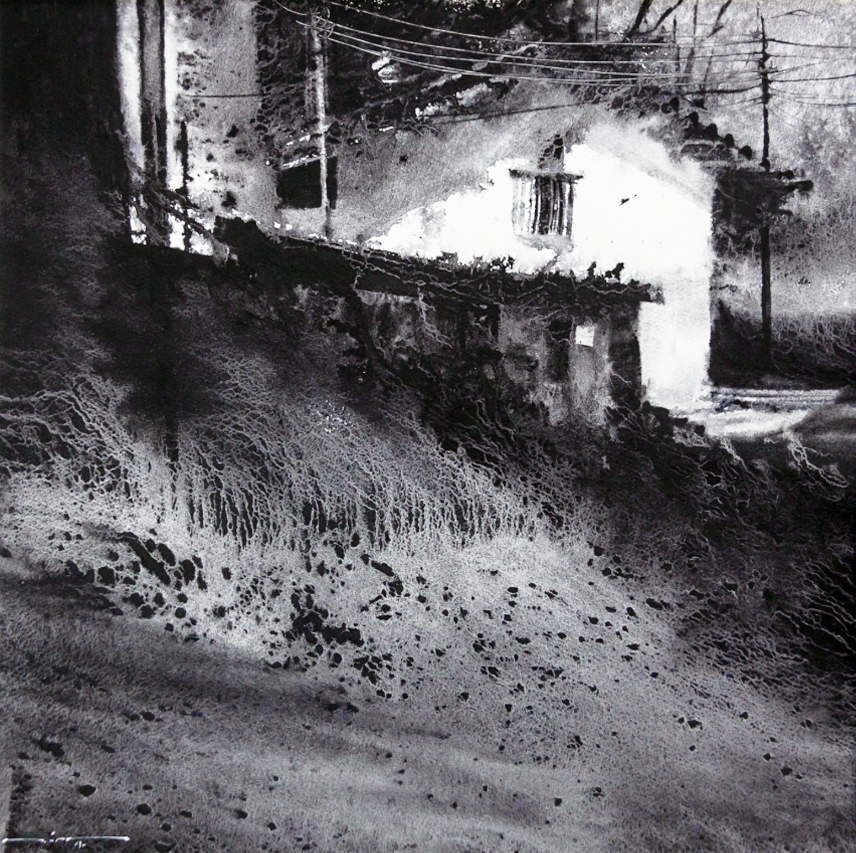
Water is his primary tool. He often pre-wets the surface unevenly, then introduces pigment into these damp areas so it disperses unpredictably. By adding clean water at specific moments, he pushes pigment outward, creating blooms, soft edges, and concentrated granulation patterns. Timing is critical: the most effective effects occur when the paper is damp rather than fully wet, allowing particles to settle while still being mobile.
Leave a Reply